The software working and the team using it are two different projects
Most AI rollouts do not fail on capability. They fail on adoption.
General AI tools are built for many industries. That reach is worth something, but it leaves the translation work with you: deciding where it fits, connecting it to the job, writing processes people can safely follow, training the users and keeping the rollout moving while the work carries on.
Large vendors serve very large markets. A support request may pass through several teams before it reaches someone who can answer it, and training is often delivered by a third-party consultant who understands the software but not the pace of a live construction project.
On site or online. Usually both.
The first session happens where the work is.
In the trailer, with the crew
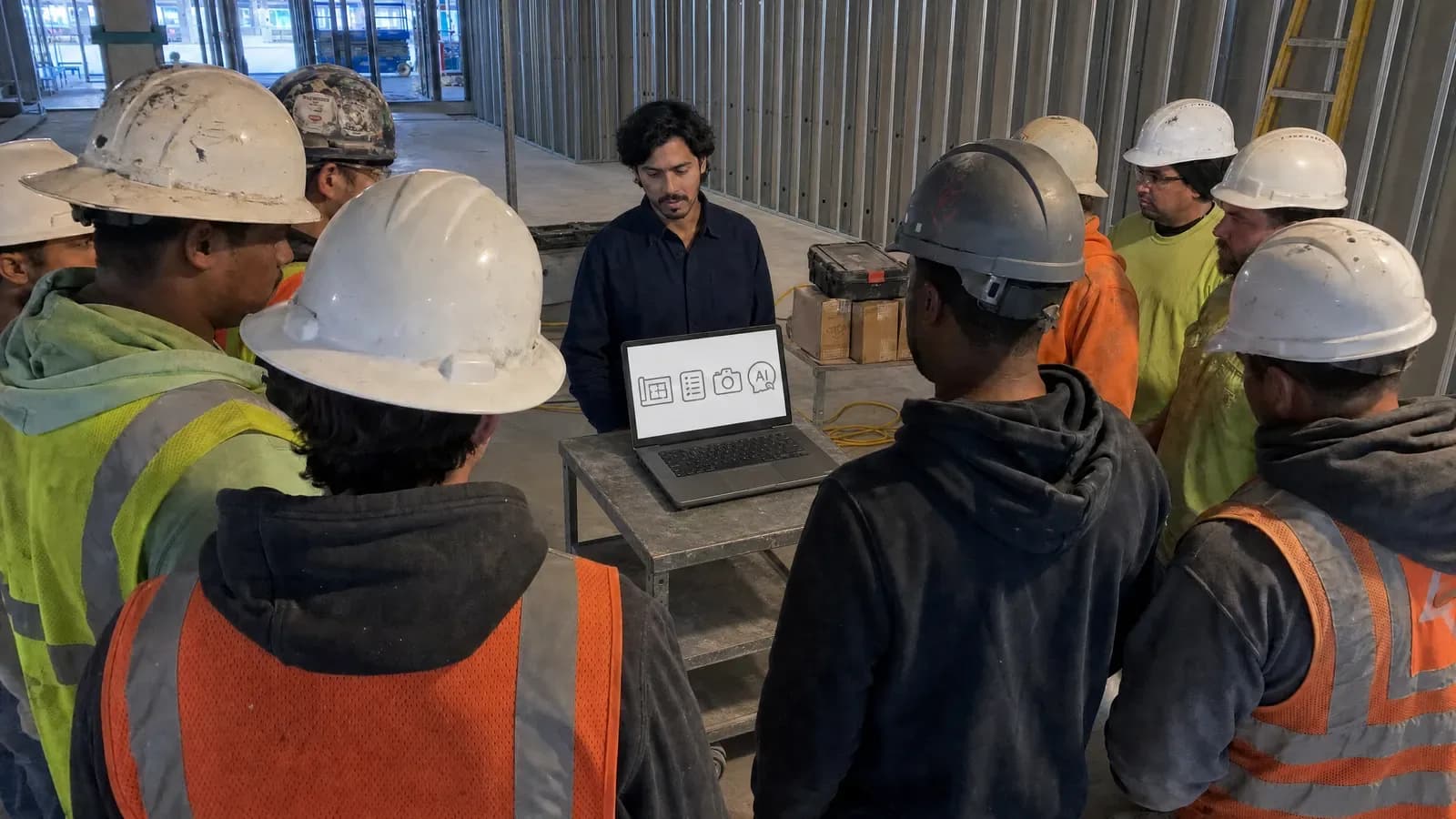
We come to the project. Supers, foremen and anyone else who creates the daily record get trained standing up, on their own phones, on the job they are running that week. Short enough to fit either side of a shift.
Scheduled around the job
For office roles and for anyone the site visit missed. Shorter sessions, recorded if you want them, and repeated for new starters rather than treated as a one-off event you had to be present for.
Trained on your project, not on sample data
Generic examples do not survive contact with a live site.
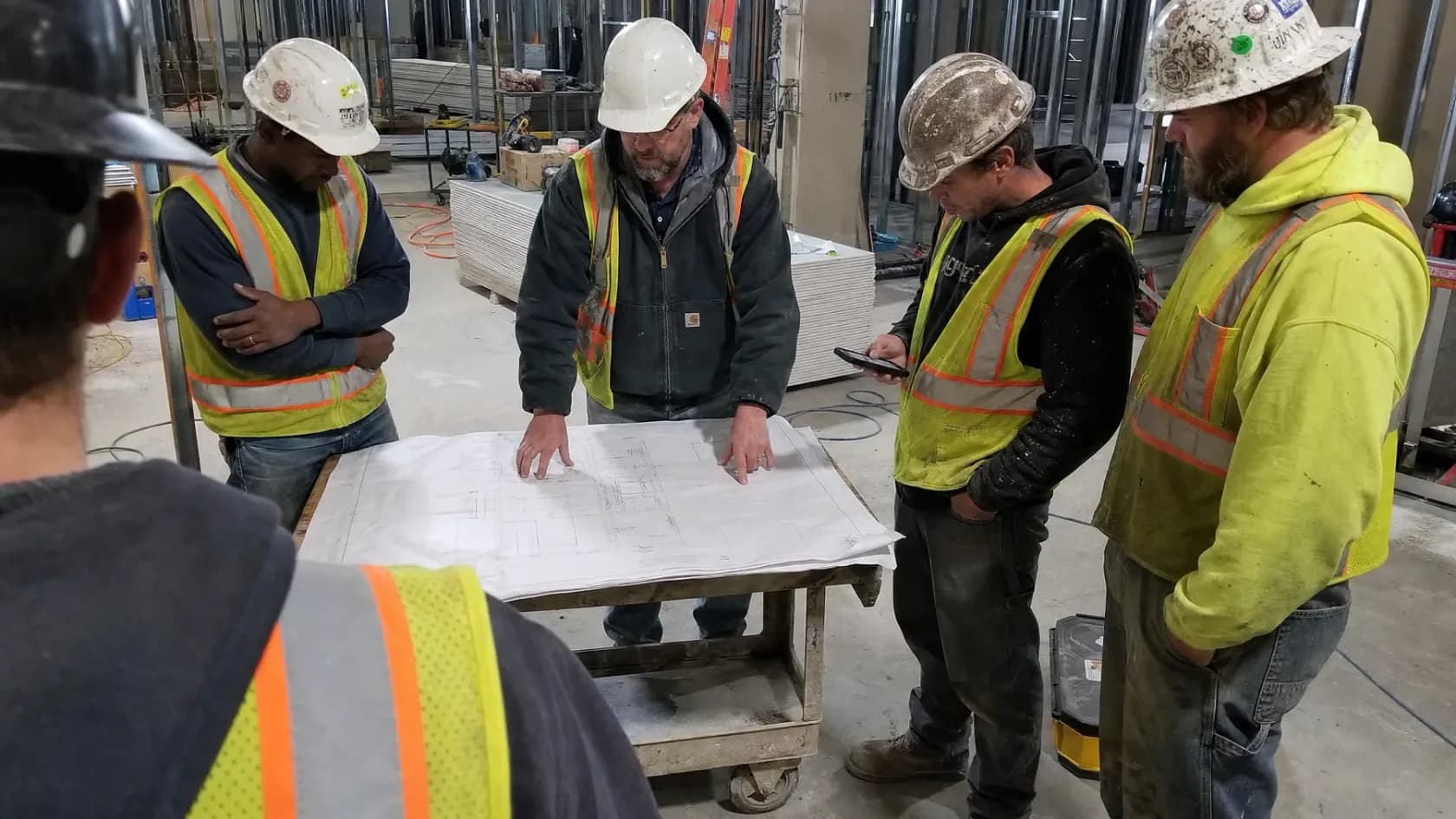
Before the first session we load your material, so what people learn on is what they will use on Monday. Nobody is asked to imagine how it would apply to their job, because it is already their job.
- Your drawings: the current plan set, with the revisions that are actually live on the project.
- Your correspondence: real RFIs, submittals and email threads, so search and linking are demonstrated on records the team recognises.
- Your approval chain: the reviewers and the order your contract requires, not a default workflow.
- Your templates: the daily report and transmittal formats you already send, so the output needs no reformatting.
The setup has to respect the pressure the team is already under — bids, inspections, changes and closeout. A site team cannot spend months learning a new system, so we do not design a rollout that assumes they can.
Who we train, and in what order
Start with the people who create the record. Everything else depends on them.
Site supers and foremen
Daily logs, inspections and photos from the phone, offline if the site has no signal. If this group does not adopt, nothing downstream has anything to work with — so they are trained first, in the shortest session.
Project managers and coordinators
Where the field record links to the schedule, the drawing revision and the submittal behind it, and how the daily report writes itself out of what the crew already sent.
Estimators
Working the plan set inside the platform: counts, measurements and the checking step that keeps the estimator in control of the number rather than the model.
Back office and accounts
Pulling the evidence behind a claim or an invoice out of records the field already filed, instead of chasing four people for it at month end.
Our engineers stay after the training ends
The problems that stall a rollout appear in week three.
When it helps, our forward-deployed engineers work alongside your team. They study the workflow as it actually runs, watch where people get stuck, and turn what they find into changes in the product rather than into a longer training deck.
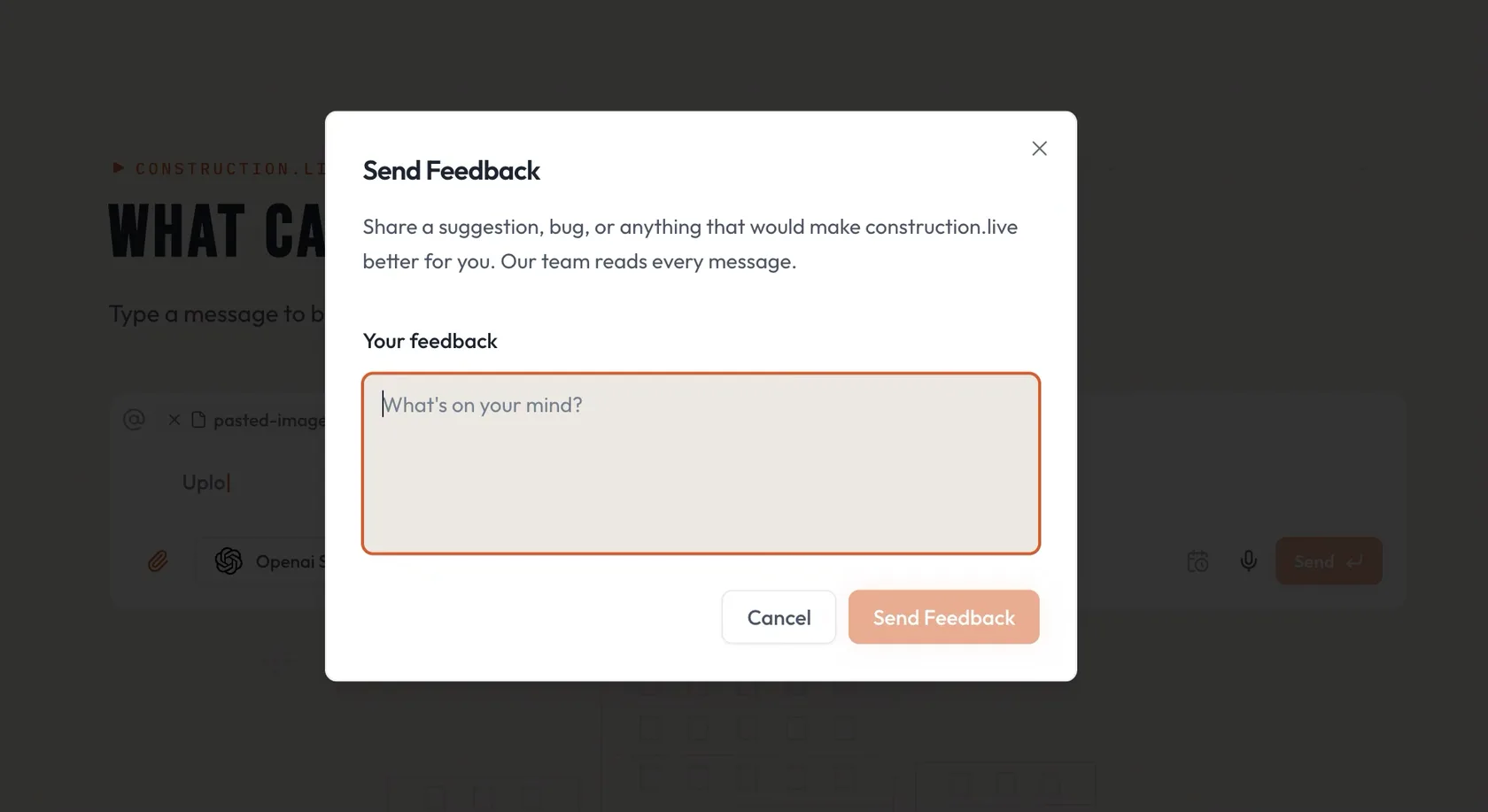
That is the same loop that produced the T&M consolidation workflow for one client in a week: a real operating problem went in, and the product changed to solve it. Feedback goes from anywhere in the app straight to the people who can act on it.
What we are aiming at
Not seats filled. Work that got easier.
- Estimators move from drawings to checked quantities faster.
- Field information reaches the office with less chasing and retyping.
- Meetings, photographs, reports and decisions become part of the project record.
- Company knowledge becomes easier to find and reuse.
- New ideas become working tools while the need is still current.